ToneGym Hero: Pierre Thalamy
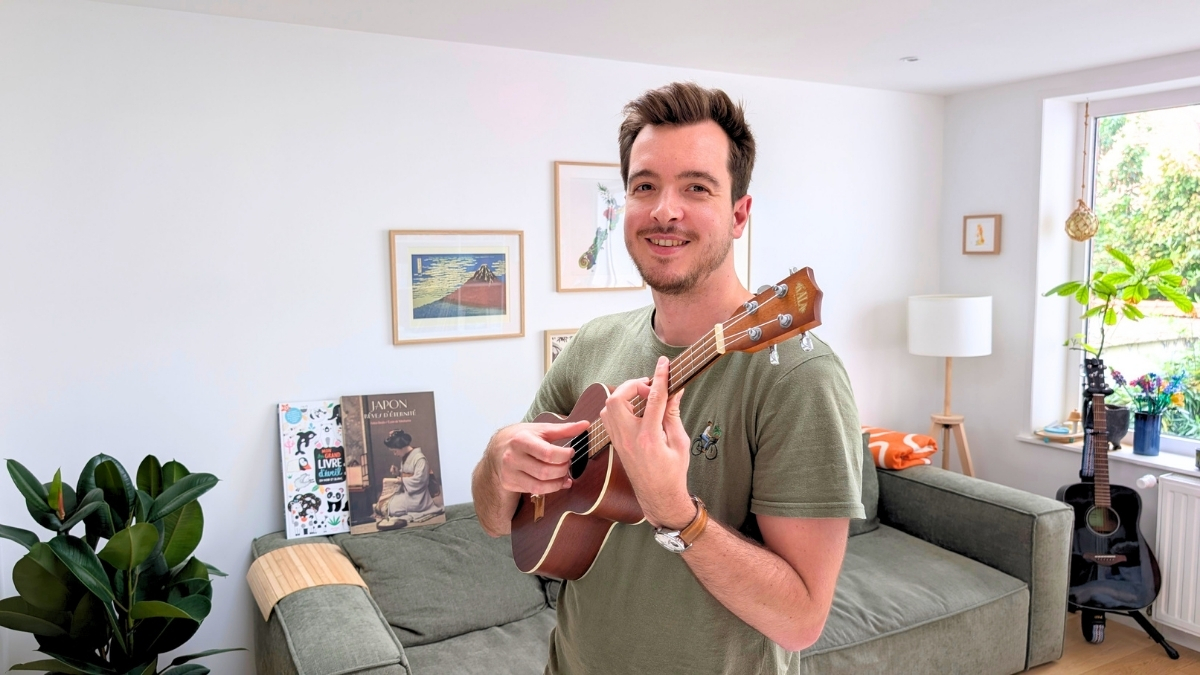
Fingerstyle guitarist, new dad, and self-confessed cheese obsessive from the heart of Comté country, Pierre Thalamy never expected to make music at all. He grew up as a devoted listener in a family where nobody played. In his mid-twenties, a roommate’s ukulele turned into Yousician lessons, then a guitar, then a couple of years of gathering dust. When he came back, he wanted to understand what he was playing, not just copy songs. With 10-minute practice sessions squeezed into fatherhood, lullabies that quietly trained his singing, and ear training on the walk to childcare, he found that the “innate” musical ear he thought he lacked could be built one interval at a time. Pierre Thalamy is this month’s ToneGym Hero!
How did you first find your way into making music?
I came to playing music relatively late, in my mid-twenties. Growing up, nobody in my family or close circle really played an instrument, so although music was already a huge part of my life as a listener, making it myself simply wasn't something I had been exposed to. I don't think I had ever really asked myself whether I might have some musicality in me. That changed almost by accident in engineering school. One of my roommates had a ukulele lying around, and I started picking it up and experimenting with it.
Eventually I bought my own and began teaching myself through apps like Yousician. It was a very game-like way of learning, and it gave me some of the mechanics of playing an instrument. I later moved on to guitar, but my practice eventually faded and my instruments spent a couple of years mostly gathering dust. When I came back to guitar a few years ago, something had changed: I didn't just want to learn how to reproduce songs anymore.
I wanted to understand what I was playing and become more independent musically. That second start is really when music became a lasting part of my life.
Aside from music, what hobbies or activities do you enjoy?
I love cooking, and I'm probably a little obsessed with food in general: good ingredients, fermentation, good beer and wine, and especially cheese. I grew up in the region where Comté is made, so I like to pretend that this obsession is basically cultural heritage. Cooking is also one of the main ways I show love. I really enjoy spending time figuring out how to make a dish taste great, then making it for family or friends and seeing them enjoy it. I'm also fascinated by biology, love reading science fiction, and enjoy learning languages.
What’s something you're surprisingly good at that has nothing to do with music?
Apparently, accents and impersonations! I've always found it quite easy to pick up the sound and rhythm of the way people speak, and I tend to exaggerate it for comic effect once I know it makes people laugh. Languages also come quite naturally to me, so I suspect the two are related. I think I've always paid a lot of attention to how things sound.
If you could play or create with any artist, who would it be and why?
I think I'd choose Passenger. He was one of the artists who made me want to learn fingerpicking in the first place, so his music played a real part in getting me started on guitar. I've always found his arrangements incredibly moving. They can sound simple and intimate, but there is so much feeling in the way the guitar supports the song. That combination of fingerstyle playing, storytelling, and emotion really resonates with me.
Playing with him would probably feel a little surreal, because his music helped shape the kind of guitarist I wanted to become.
What musical instrument do you love the most, and what makes it irreplaceable for you?
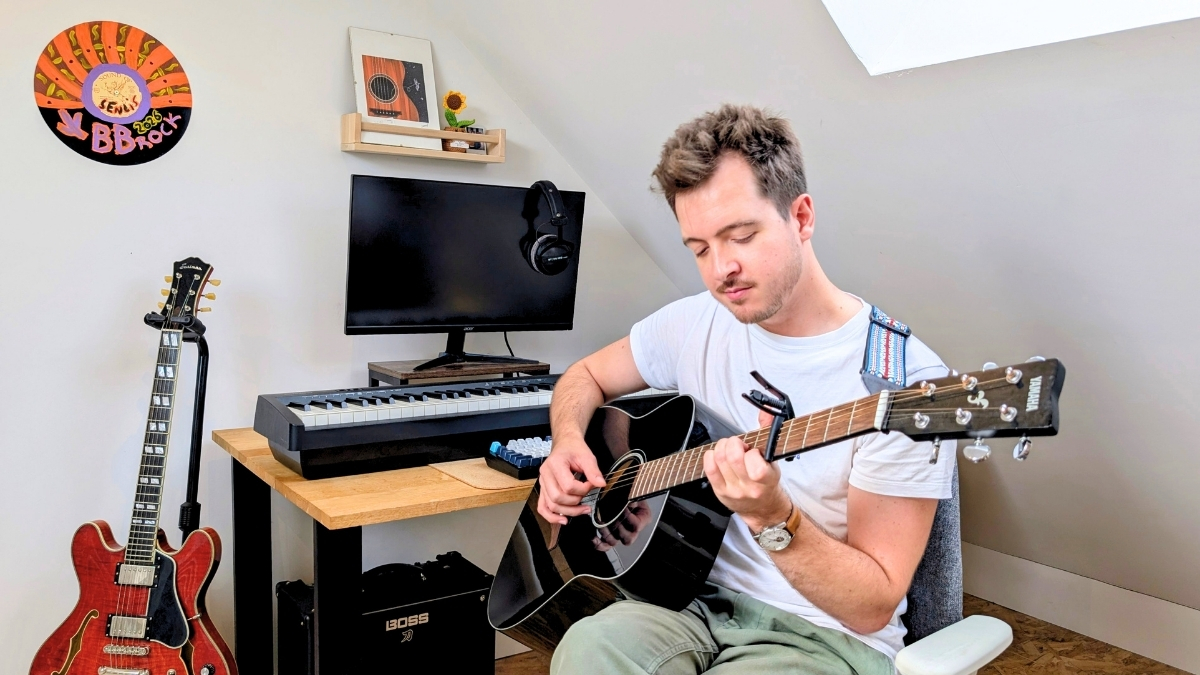
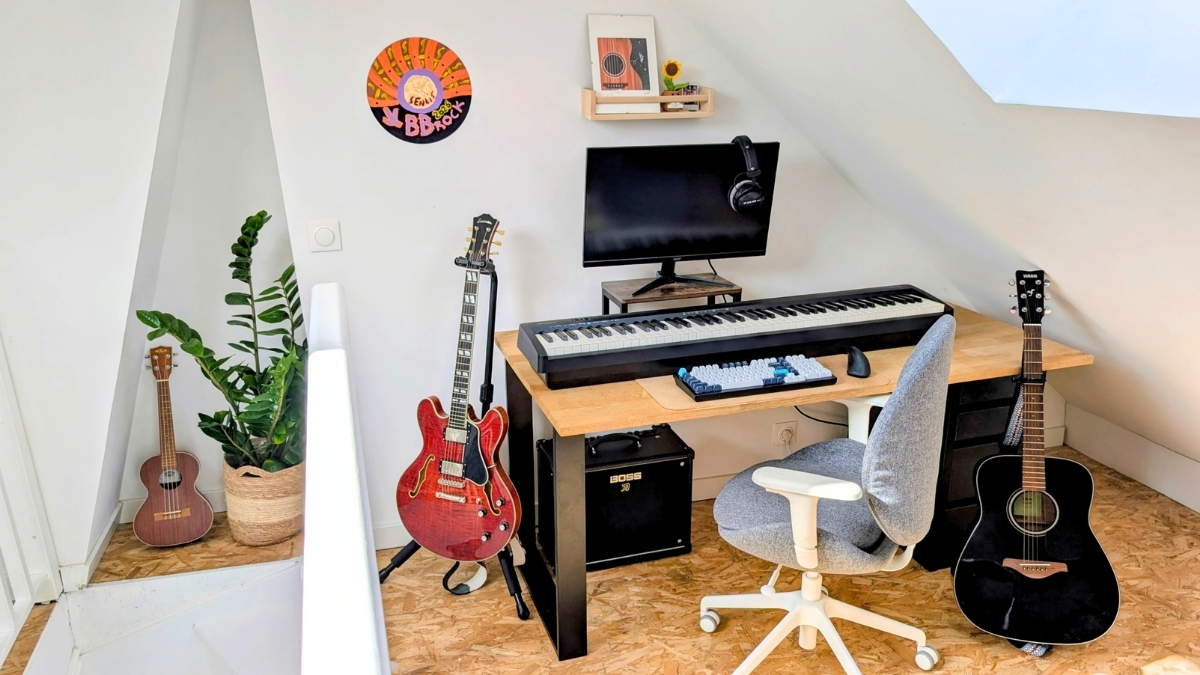
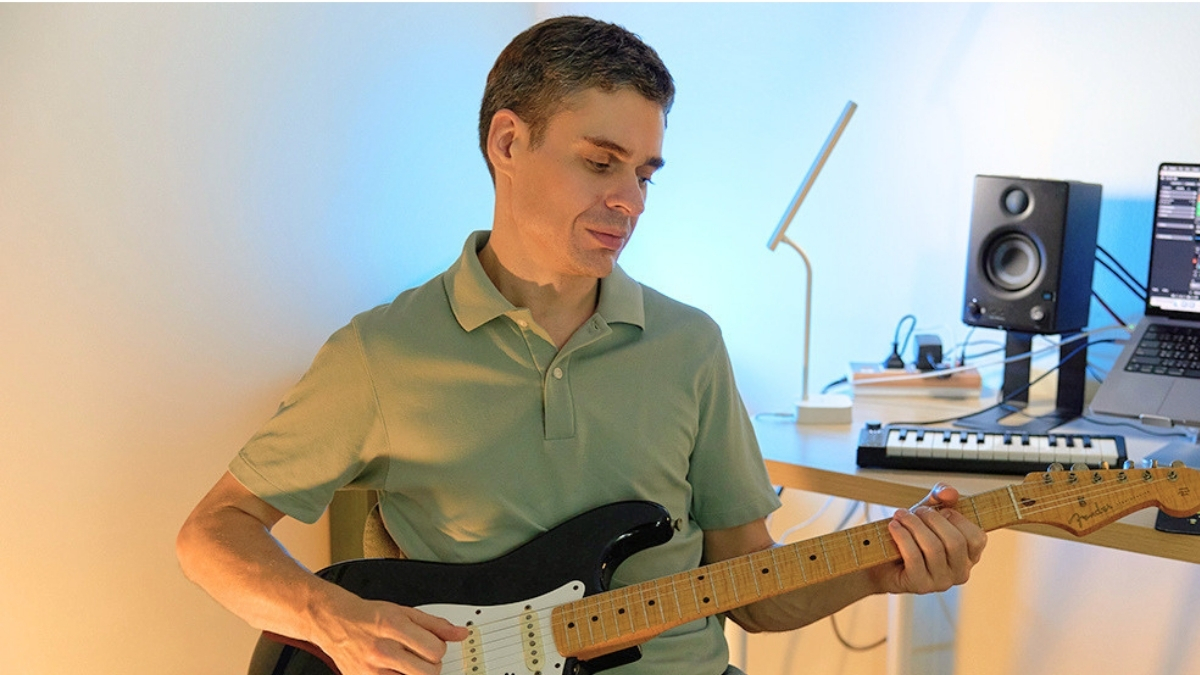
The guitar, without hesitation. I have explored other instruments and recently started learning piano, which I find fantastic for understanding harmony and theory. But guitar still feels much more personal to me. I especially love fingerstyle and fingerpicking. One instrument can carry rhythm, harmony, bass, and melody, but still sound very intimate. That matches the kind of music I have always been drawn to, and it is a big part of why guitar feels so personal to me.
The guitar is also the instrument I reach for when I do not necessarily want to practice anything. Sometimes I just want to sit down, improvise, and find something that matches how I feel in that moment. A lot of the music I have created so far has actually been like that: completely ephemeral, played once for myself and never recorded.
What daily or weekly habits do you have in place to keep you creating?
Consistency matters much more to me than long practice sessions. I became a father almost a year ago, so I'm currently in a phase of life where I probably have the strongest desire I've ever had to make music, and the least amount of free time to do it. Most days, I try to find 10 to 20 minutes to play an instrument, sometimes more if I'm lucky. I also use ToneGym very regularly, often while walking to drop off or pick up my daughter from childcare.
Becoming a father has also helped my singing much more than I expected. I sing to my daughter a lot, partly because I hope it helps nurture her own musicality, but also because singing is one of the few ways I can practice music completely hands-free while holding her! It has made singing feel much more natural and much less like a performance. I also don't separate practice and creating very cleanly.
Even a short session can turn into a few minutes of improvising and following whatever sounds good to me that day. So my routine is not very glamorous, but it is very realistic: small pockets of music woven into everyday life.
What keeps you motivated to continue making music?
The biggest motivation is that music still gives me something that almost nothing else does. I originally started playing for myself, not to perform or impress anyone. Picking up an instrument became a way to process whatever I was feeling. I could improvise something, follow whatever felt right, and feel different ten minutes later. In the beginning, improving at guitar mostly meant expanding the musical vocabulary I had available to express myself. Over time, curiosity became just as important. The more I understand music, the more there seems to be to discover.
And every time something that once seemed impossible becomes possible, it makes me want to keep going. One of the most motivating discoveries has been realizing that many abilities I used to think were almost innate are actually trainable. It has gradually made me less concerned with whether I already qualify as a 'real musician' and more interested in what I can learn next. Playing and singing at the same time used to feel almost impossible to me.
Then someone told me, 'You can do it, you just have to train it.' A few weeks later, I could. Ear training has given me that same feeling on a much bigger scale. Each little breakthrough makes the next one feel possible.
What song would you choose as the soundtrack of your life?
I think it would be All the Pretty Girls by KALEO. Not because I can point to one moment when it became 'my song,' but because it is probably the song I have come back to most consistently over the years. In that sense, it has already become a soundtrack to my life. The theme resonates with me too: that feeling of sometimes not being the one who gets chosen. But just as much as the lyrics, it is the emotional arc of the song itself that gets me.
The way it grows and carries that feeling musically still moves me, even after all those listens. Maybe the soundtrack to your life is not necessarily the song that sums you up perfectly, but the one that keeps finding its way back into your life. For me, that's All the Pretty Girls.
What's your favorite feature on ToneGym, and how has it helped you in your musical journey?
Ear training games, by far. I especially love Departurer, Lander, Intervalis and Melodix. What I like most is how the games feed into one another. Departurer, Lander and Intervalis let me isolate specific ear training skills and approach them from different angles, while Melodix makes me bring several of those skills together at once. The progression feels very deliberate: you train the pieces separately, then start hearing how they interact in actual music.
Before ToneGym, developing my ear felt almost mysterious. I could understand music theory intellectually, but actually hearing intervals, chord qualities, or harmonic movement felt like a completely different ability, almost something you either had or you didn't. I was already a very intense, emotional listener. ToneGym added another layer to that: I began hearing music analytically too, without losing the emotional side.
The biggest change is not actually what happens while I am using the platform, but what happens afterwards. When I hear music now, I naturally start wondering about the intervals, the chord progression, the rhythm, or how the different parts fit together. It even spills into everyday sounds. A simple 'ding-dong' doorbell can suddenly become a descending major third in my head.
That kind of thing sounds trivial, but to me it was a real sign that my ear had started changing. I once described it as going from seeing in black and white to seeing in color. The sounds were always there; I'm just gradually learning to distinguish things inside them that I couldn't perceive before. At this point, my only real regret with ToneGym is that I wish I had discovered it sooner.
What’s something exciting you're working on or looking forward to?
The thing I'm most excited about now is turning everything I've learned into more actual music. I want to become more comfortable singing while playing rhythm guitar, start making music with other people, and finally begin writing and recording songs of my own. I've improvised for years, usually just for myself and in the moment, so creating music isn't entirely new to me. What feels new is the idea of taking one of those ideas, developing it, and actually finishing something I can call my own.
For a long time, I think I was waiting to feel knowledgeable or confident enough before allowing myself to do that. I'm starting to realize that confidence probably comes from creating, not before it. So that's the next chapter I'm really looking forward to: using everything I've learned, playing with other people, and seeing what kind of music comes out when I finally give myself permission to make it.
You can check out Pierre on his Website!
Comments:
Login to comment on this post