profile
Ray Z
Mar 13, 02:45 in ToneGym Olympics
Hey guys, just a question on sus2 and sus4 chords, I find them quite difficult to tell apart. Personally I try to mentally take apart the notes which takes quite some time, or feel out where the tonal cluster is and flip a coin.

Does anyone have any tips on this, or it's just a matter of practice?

Thanks!
profile
Sebastiaan Flier
Mar 13, 11:22
the problem might be that you are flipping the notes. c-f-g- is sus 4, but f-g-c is sus 2. Hearing where the M2 is ( f-g in this case) and listening if there is a note beneath that helps me, maybe it will help you.

profile
Steve Vera
Mar 13, 11:36
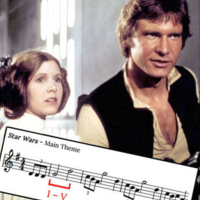
I use The Force and still only get it right half the time
profile
Sebastian Gonzalez
Mar 13, 14:42
Wasup Ray Z,

My personal suggestion would be to understand how they relate to the major chord. Although they have similar chord qualities, and are interchangeable with their closest circle of fifths neighbor, they suspend two different resolution notes (the 3rd in sus4; the root in sus2).

Once you get a grasp of where the suspended note wants to resolve to, you'll better understand how different they sound.

To my ears, the sus4 is much more subtle and embelished, way more pulling to resolution, very often used in music to add a little tension to a section's final chord. Whereas the sus2 is just interesting, very stable by itself but also a little mysterious and sparking curiosity, giving you a sense of indetermination, it doesn't really pull to resolution as the sus4 does.

profile
ToneGym
Mar 13, 14:29 in ToneGym Official
Most band fights don’t start where people think they do.

Every band says the music matters most… until someone shows up late again.

The Debate: What causes more arguments in a band: ego or timing? Not rhythmic timing: actual lateness to practice, rehearsal, and sessions.

Is the real problem big personalities and control issues, or people not respecting the clock and wasting everyone’s momentum?

Why It Matters: Strong musicianship means nothing if the group can’t build trust and consistency. Team Ego or Team Timing? Why?
I passed the test, but I don’t know how to get the award, can someone plz help?
profile
Ken Wilkens
Mar 13, 12:14
Sometimes takes a day for the platform to update and an award show up on your profile.
Congrats @Kim Lee for winning the Diamond Ears Award!
profile
Wow!! Great job!!
profile
Colin Aiken
Mar 12
Outstanding achievement!
profile
Kim Lee
Mar 13, 03:13
Thanks, everyone.
Congrats @Ray Z for winning the Silver Ears Award!
profile
Ray Z
Mar 12
thanks everyone!
profile
Congrats! Just wondering, how do you get these rewards?
profile
you play games or/and do daily workout and get points. After you get enough points (you can see the breakpoints here https://www.tonegym.co/member/badges) you get your award
Hello ToneGym people!,
I made myself a tool for learning (harmonic) intervals that actually works!, though I could share:

https://play.unity.com/en/games/56ff7036-5f14-48e6-919d-acf1ca9783f8/true-harmonics

Looking forward for your comments!
profile
OMG thank you Kinsey, I already found use for it in sound design!!
I loopedback internally the output of my interface and record the sounds back to the DAW... I'll use the low pitched ones, and only the bottom row of intervals and some combinations to manipulated them on a sesion!! A clean canvas to design tense textures, for transitions and non organic SFXs!

Would be cool if one could adjust the octave of the intervals, I had to wait till a low pitched sample came in every interval😅

Nice tool, thanks for sharing!
profile
Kinsey Nietzsche (author)
Mar 11
the intent is to get used to how the intervals sound—just that. alternatively, you can play more intervals in succession to get used to the difference. As soon as you hear the first tone sound, try to guess the sound of the second tone. it's a mental exercise game.

the frequencies are chosen at random, but tend to go up when chosen an ascending interval and vice versa. the idea was that when I, for example, learn intervals by pressing keys on keyboard, I already know what I am going to press, so my brain isn't really trying to guess, but rather to recall how the next tone sounds—this is to prevent that.

I am not sure what you are trying to achieve, Rodrigo :) to play sine wave intervals in the frequency of your choosing you just have to use a simple synthesizer.
profile
Oh I know, but I don't care. Set up that loopback is as simple as use a synthesizer, I just needed some base tones for a job and they were there ready to sample.
3 Tips For Creating a Productive Songwriting Routine
Most writers don’t have an idea problem. They have a structure problem.

Team “write daily no matter what” vs team “only write when inspired, which one are you?

Share your current weekly schedule (days + hours), then do a 10-minute SoundGym workout before your next writing block and report back: did it help you start faster?

Check this article out to help you with your songwriting routine: https://www.tonegym.co/blog/item?id=3-tips-for-creating-a-productive-songwriting-routine
nothing much. just family.😍
profile
Cuantas Vacas
Mar 08
!!!!????
profile
Benjamin Jack
Mar 11
Ok. Six is a perfect number. Cool. 1*2*3 = 1+2+3
Congrats @Logan Castleton for winning the Silver Ears Award!
profile
Colin Aiken
Mar 09
Excellent!
profile
Congratulations!!!
profile
Great work Logan
Congrats @Rodrigo Andrés Aguilar Arosteguy for completing the 'Music Theory Basics' program!
profile
Good for you!!