I take something of a mechanical, deductive approach, which is arguably not ideal compared to listening for tension, resolution, and chord quality (though those things can absolutely still be part of it), and is pretty time-consuming, but it's how my brain works. Take it or leave it as suits you.
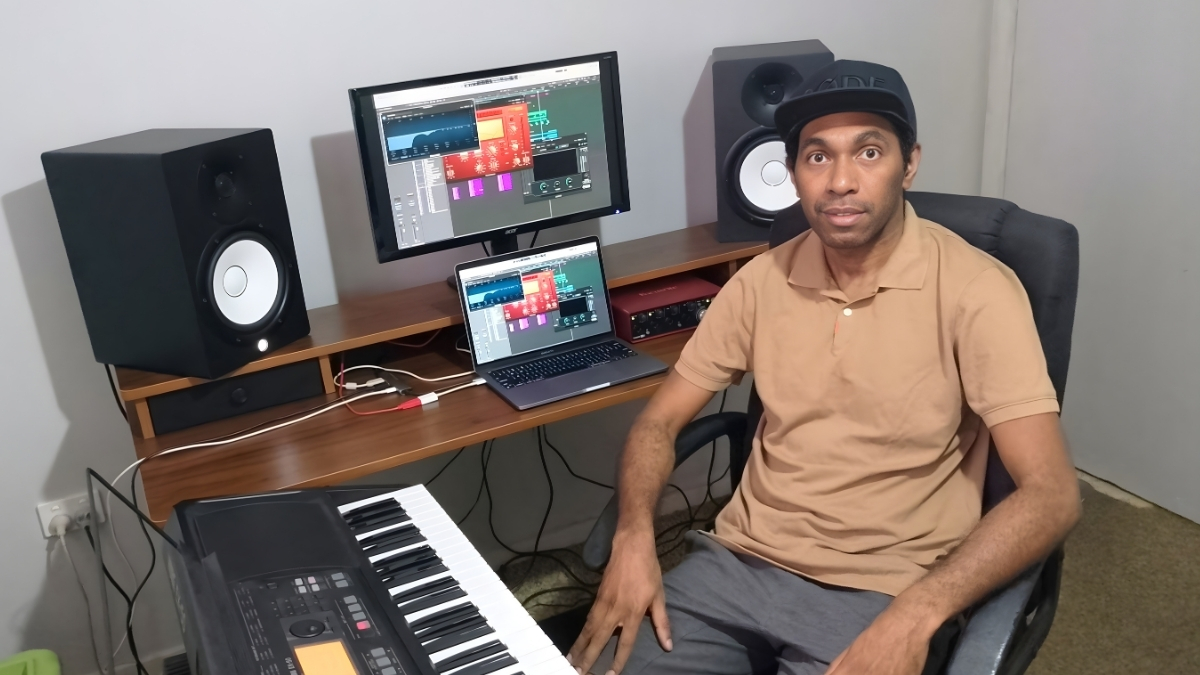
First, I find a note in each chord. Whatever note you can pick out. This gives me a sequence of notes. I match this on my electric piano that's right next to my computer. I now have a sequence of intervals.
For instance, let's say I match the notes B, C#, D. The interval pattern is +M2, +m2. Let's say the choices are ii-V-I, ii-I-V, and ii-IV-I. Which of those have that interval pattern?
I then refer to a cheat-sheet I have of the notes in the chords in the key of C. Again, it doesn't matter whether the progression is actually in C, as I'm just looking for interval patterns.
Does ii-V have an interval of +M2? Yes, taking the key of C as an example, Dm (DFA) to G (GBD) has two of them, A to B and F to G. What about ii-I? Dm to C (CEG) has two as well, D to E and F to G. And ii-IV? No, Dm to F (FAC) has no such intervals.
OK, so now we've eliminated one of the possibilities. To narrow it further, let's look at the second interval in the pattern. So, if we've gone from Dm to G (ii-V), we've landed on either the B or the G according to our interval pattern (relative to the key of C -- of course, our absolute notes are different). Does the I chord (to complete the ii-V-I pattern) have a note that is a m2 up from either B or G? Yes, the root of the C chord is up a m2 from the B in the G chord. So, that's a match.

But is the other pattern a match, too? If we go from Dm to C (ii-I), we've landed on either the E or the G (again, relative to the key of C). Does the V chord (to complete the ii-I-V pattern) have a note that is a m2 up from either E or G? No, it has the notes GBD, none of which fit the bill.
Voila! We now know that ii-V-I is the only match among the choices.
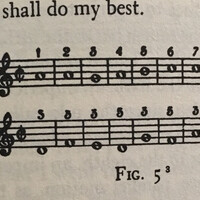
We've traced through the notes A, B, and C as matching the interval pattern, but of course the actual notes we matched are B, C#, D. We can now surmise that the progression is actually in the key of D (with chords Em, A, D), but the game doesn't require us to identify the absolute chords, just their relative harmonic functions, so that's just a bonus.

I'll add that sometimes just recognizing and matching the chord quality -- major, minor, diminished -- is quite sufficient to narrow down to the right answer. And if it doesn't narrow it all the way down, it can at least eliminate some of the possibilities to speed up the above process.
Being a drummer first learning musician, I cannot count the amount of times rhythm has given me an edge or helped me out in an unexpected way with other instruments.
It can be helpful to practice scales or very simple melodies, then record yourself and compare it to a piano or another fixed-pitch instrument. The goal is to get feedback on whether you're on pitch or not (and in time, as your ear improves, whether you're sharp or flat). If that's not working, there may be a technical reason why you're not on pitch, such as breath support, and you might need to try vocal coaching if that's the case.
Dave Weckl: Time Signatures in Dis' Place This (Rhythmic Analysis Help!)
What are the time signatures for Dave Weckl's Dis' Place This (from the Hard-Wired album)? I know the meter shifts frequently, but I'm struggling to count the bars and orient myself to the downbeat. Could someone provide a breakdown of the rhythmic structure and section lengths?
Treble and Bass Clef Notes Explained: What Are Clefs in Music?
Clefs are one of those “small things” that quietly unlock everything in music theory. If reading notation ever felt confusing, this new breakdown makes treble and bass clef finally click.
Inside the article: • How clefs map pitch ranges • How to read treble & bass clef notes • What ledger lines really represent • The connection point between both clefs (middle C!) • Alto & tenor clef explained simply • Why producers and instrumentalists should know this
Give it a read, share your instrument + clef in the comments, and keep your theory chops sharp. 🎼
We use cookies to improve your experience. Essential cookies keep the site running. We also use optional cookies to enhance performance, analyze traffic, and personalize ads. By clicking “Accept”, you agree to the use of all cookies.