

I know it takes time, but any really game changing tips on how to hear the difference between and Augmented and Diminished chord? They both feel equally dissonant. I've been playing along matching the chords by ear (which in itself is tough going), Googled a bunch, understand in theory Dim resolves up, Aug down, their sonic characteristics (to me both are just dissonant) but without any progression or key context I'm really struggling.
Not sure a noob like me is in a good position to give advice, but I'm trying to get the interval between the highest and lowest note on the chord. Smaller interval - diminished, bigger interval - augmented
You sing a note you hear and then you sing a note a major third and/or a minor third above or below, at which point it should be easy to figure out which one sounds...if it sounds a minor third it's a diminished chord, if it sounds a major third it's augmented.
I've read and always thought of these words to describe them:
Aug – mysterious, dreamy, intriguing, thoughtful, curious Dim – tense, uncomfortable, intense, anxious
Try making your own mind map/model of what they evoque. I know you said they sound dissonant, but it's not the same type of dissonance, you gotta get to know them better, as if they were your own friends. Takes a little time to establish a relationship. Look for examples in songs you know.
I try to hear which note (I, III or V) the highest note is, where the root note is together with the overall sound feel (root feels 'rooted', common, 'at home', 1st sounds like the end of a piece, 2nd sounds 'more interesting', 'not at home'. But I'm not really good at it yet.
Easy brother, just sing the notes. The intervals that form are different, hence, the overall timbre or color of the chord is gonna vary. Those are the subtleties you are looking to train.
Nevertheless, if you don't think or visualize how it is gonna be a useful skill for your musicianship, just don't practice it. It's okay. The games should be useful and fun.
I think there are a few nuggets of truth to this idea. The linear and repeated layout of the piano can make it easier to feel stuck in the same patterns. Its just every single note, side by side, octave after octave with a pretty big range and sometimes I feel the whole paradox of choice thing going on. Also the culture around piano is generally more strict. This note, chord, scale, or way of playing is correct and others are incorrect. Contrast all this with something like a guitar, the culture is more rebellious in spirit instead of there being a right or wrong. The shapes change across the fretboard so playing it doesn't look or feel as repetitive. There are open strings, fretted notes, harmonics, hammer ons, pull offs, bends, slides, etc. that all sound a bit different texturally whereas with a piano you kind of only have the dynamics to play with. So I see where the question is coming from, but every instrument has its pros and cons and, as people have already pointed out, nobody is forcing you to only use one. I could never call the piano a creativity killer.
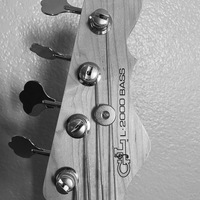
First, to answer @Petr Pistelak's question (though I think he knows my answer) a bass is a guitar. So that would be why there is no bass option. I am a rhythm guitarist myself. The most chaotic thing I've seen in a worship band is the guitarist being the head of the band and controlling the way people do things.
We use cookies to improve your experience. Essential cookies keep the site running. We also use optional cookies to enhance performance, analyze traffic, and personalize ads. By clicking “Accept”, you agree to the use of all cookies.